
About the UFMG
Placed in the southeast region of Brazil, the Federal University of Minas Gerais (UFMG) is a tuition-free public educational institution, being the oldest university in the state of Minas Gerais. Since the foundation of UFMG in 1927, its students have exerted major influence in the cultural, political, and economic spectrums of society.
UFMG is a regional and national leader concerning education, community outreach, culture, scientific research, and patents generation in various fields of knowledge. The university occupies the top positions in the rankings that evaluate higher education in Brazil.
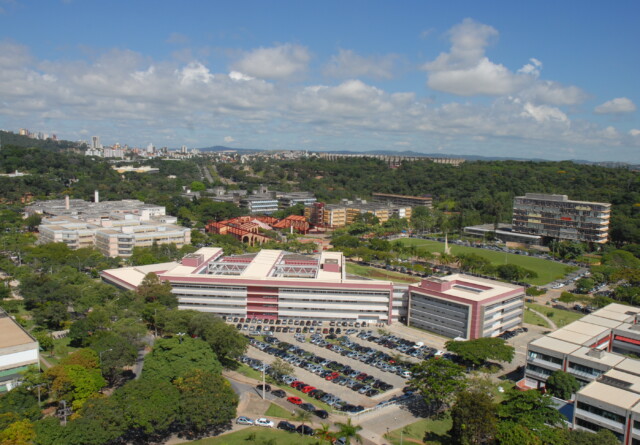
UFMG’s studentship gathers around fifty thousand people in the cities of Belo Horizonte and Montes Claros, distributed in 97 undergraduate courses, over 90 graduate programs, and more than 700 research centers. Belo Horizonte, the capital of Minas Gerais, allocates a large part of the UFMG structure on the Pampulha campus, reuniting the main administration offices and the largest number of buildings.
Courses
According to the Brazilian system, higher education is divided into:
Graduação (Undergraduate Degree)
Graduação is the first stage of higher education, offering professional training and knowledge to the students in various fields. These courses regularly last from 8 to 12 terms.
To check out undergraduate courses available at UFMG, please click here.
For more information about Exchange Programs available at undergraduate level at UFMG, please click here.
Pós-graduação (Graduate Degree)
Pós-graduação refers to study programs with specialized knowledge and extensive research training. These courses differ in terms of duration and level of knowledge. At UFMG three modalities are available: Especialização (Specialization Courses), Mestrado (Master’s Degrees), and Doutorado (Doctorate Degrees).
UFMG Office of International Affairs
The Office of International Affairs (Diretoria de Relações Internacionais – DRI) at UFMG is an advisory body linked to the central administration of the university. Its competence is to coordinate the institutional actions aimed at fomenting cooperation and exchange between UFMG and other institutions of higher education, research, and development, headquartered in different countries, or which maintain operations abroad.
DRI prepared guides to help foreign students and visitors arriving to UFMG. Check them out below: