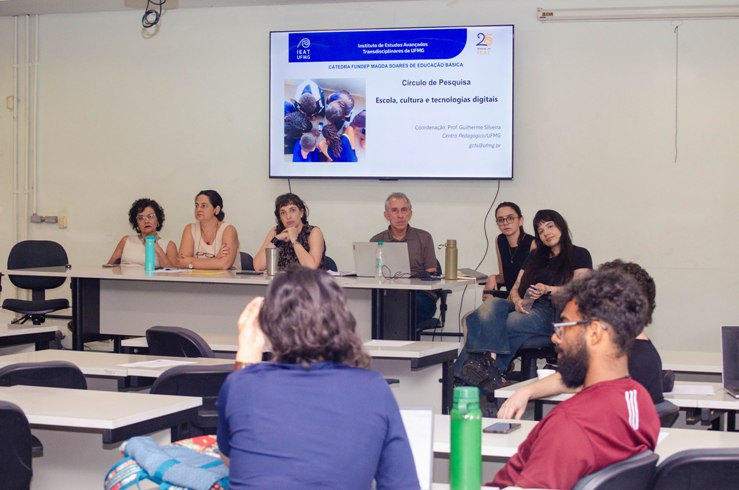
The Fundep Magda Soares Chair in Basic Education of the Institute for Advanced Transdisciplinary Studies (IEAT) at UFMG held, on September 1, 2026, the second internal seminar of the research circles linked to the Chair, with the participation of researchers and teachers from basic education.
The seminar, held in the auditorium of the Permanent Commission for University Entrance Examinations (Copeve), aimed to share results and reflections from research developed by the circles and to discuss perspectives for the continuity of the Chair’s activities.
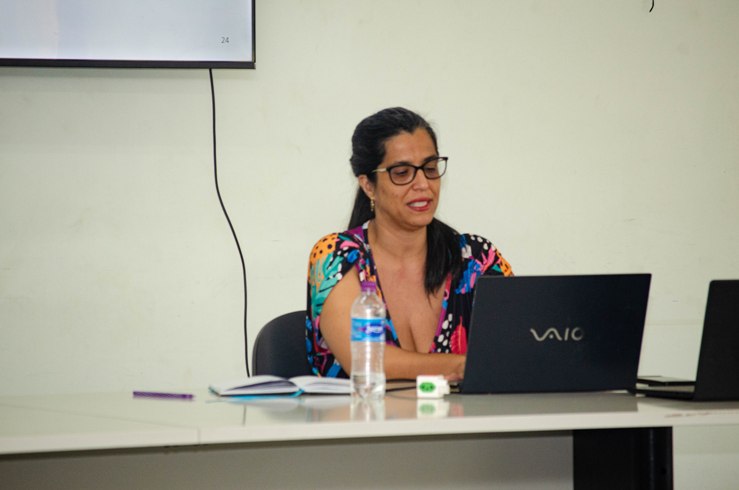
In the morning, two presentations were held. The research circle “Literacy Practices in Different Areas of Knowledge and Curriculum: Transdisciplinary Possibilities for the Production of Teacher Knowledge” was presented by Professor Maria Carolina Caldeira, from the Pedagogical Center of UFMG, and discussed the importance of understanding the school as a space for creation and research. The reflections highlighted “smaller curricula,” understood as those practiced by teachers in their daily school life, and the need to recognize the relational dimension of the educational process. In this sense, the importance of “feeling the empowering warmth of being together” and of assuming a commitment to the other in the educational experience was emphasized.
The research circle “Hybrid Spaces,” “Third Spaces,” and “Common Space” as a political and pedagogical challenge for the training of basic education teachers at the University was presented by Professor Heli Sabino de Oliveira, from the Faculty of Education (Fae) at UFMG. The presentation focused on the notions of re-existence, survival, and persistence, used to reflect on experiences developed in urban and peripheral public schools, marked by processes of racial and social segregation. The discussions highlighted the importance of mutual support networks and perspectives based on collectivity, collaboration, and solidarity. The so-called “pedagogy of the periphery” was also addressed. Among the issues raised was the challenge of educating sensitivity, with the recognition of the territory as a first step for research with students.
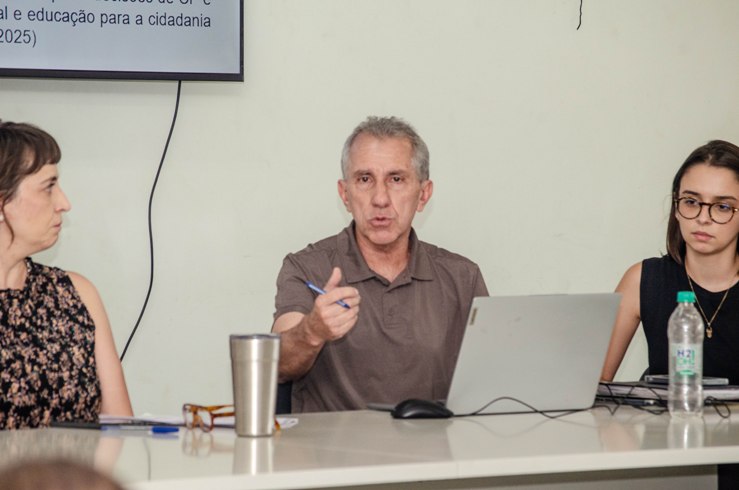
In the afternoon, the third research circle, “School, Culture, and Digital Technologies,” was presented by Professor Guilherme Silveira from the Pedagogical Center (CP) of UFMG. One of its starting points was Law No. 15.100/2025 and the debates related to the use of cell phones in schools. The discussions drew attention to the apparent contradiction between the restriction of the use of these devices by educational policies and, at the same time, their encouragement as a pedagogical resource. From a historical perspective, the group discussed the so-called “technological panic,” identifying similar reactions to the emergence of different media and technologies, such as radio, television, comic books, and the internet. It was also emphasized that the evidence regarding the effects of technologies is more complex than public discourse often suggests. Starting from the understanding that we live immersed in a digital culture, the debate advocated a critical approach to technologies, one that considers them neither intrinsically positive nor negative.
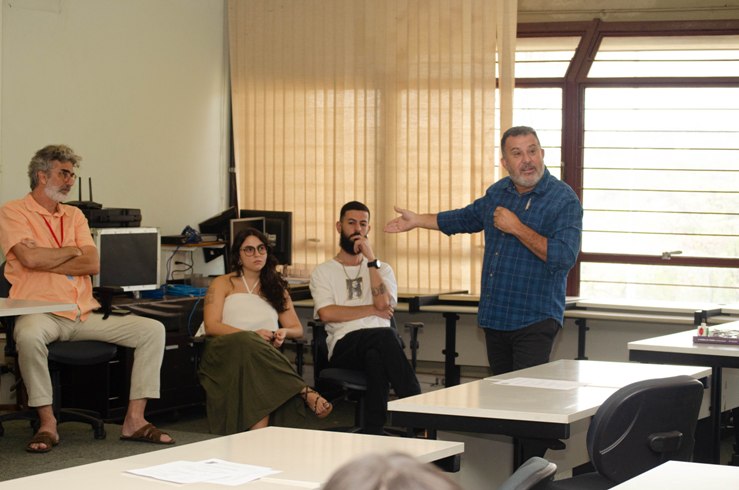
To conclude the program, participants evaluated the seminar and discussed publication proposals and the development of agendas for the continuation of the research circles’ work.
By Roberto Romero – Postdoctoral Fellow at the Fundep Magda Soares Chair in Basic Education
Photos: Rafael Mulin (IEAT/UFMG)