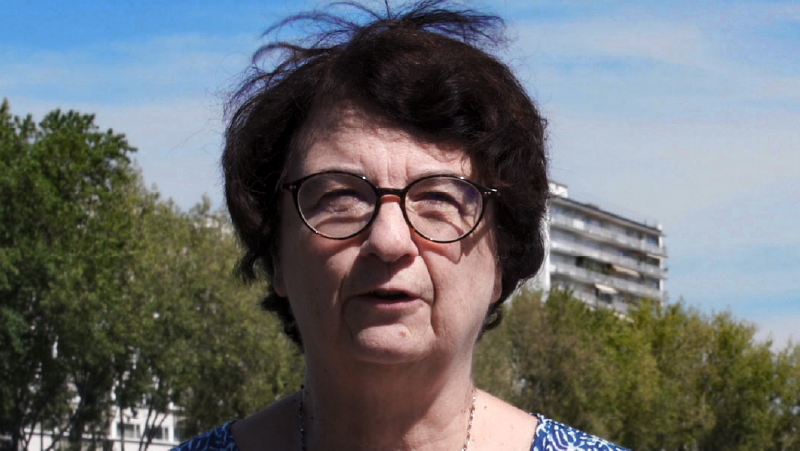
Brigitte Vinçon-Leite works in environmental engineering and urban hydrology Photo credit: personal archive
Researcher Brigitte Vinçon-Leite, from the LEESU (Water, Environment and Urban Systems) Laboratory, affiliated with the Institut Polytechnique de Paris in France, will be at UFMG in August as a guest of the FUNDEP/IEAT Short-Term Visiting Professorships Program.
On August 20, Brigitte Vinçon-Leite will give the Grand Lecture Water Resources Management: Can Digital Twins Contribute to Participatory Decision-Making? The event will take place in Auditorium B106 of UFMG’s Center for Teaching Activities 3 (CAD 3), starting at 10 a.m. Participants will receive a certificate upon prior registration through the Even3 platform.
Water resources are facing increasing pressure due to climate change and the growing frequency of extreme events, making it increasingly necessary to adopt tools capable of supporting monitoring and decision-making. In this context, the use of sensors and the Internet of Things (IoT) has become an important ally in water management, enabling high-frequency data acquisition and its near-real-time transmission to analysis and decision-making centers.
Products derived from satellite imagery are also becoming increasingly available through public portals and provide spatialized data on different environmental parameters, such as those related to water quality, at high spatial resolution. All these data streams, combined with digital modeling tools, are leading to new approaches to the management of water systems, such as the use of so-called digital twins.
Initially developed for industrial applications, digital twins are virtual replicas of physical systems capable of combining mathematical models and integrating, in real time, data streams representing the current state of the physical system. This makes it possible to simulate scenarios, predict impacts, test management strategies, and support decisions before interventions are implemented in the real environment.
The lecture will discuss how advances in these technologies are transforming the monitoring and management of lakes, reservoirs, and watersheds. During the lecture, Brigitte Vinçon-Leite will provide a comprehensive overview of current practices used to monitor and forecast water quality in France and other European countries. In addition to technological aspects, the researcher will discuss the challenges of incorporating environmental, hydrological, and socioeconomic information into digital models capable of supporting collaborative management processes. The aim is to reflect on how digital twins can foster a shared understanding of how water systems function and bring scientists, public officials, and society closer together in defining strategies for water conservation and sustainable use.
During her stay at the University, Brigitte Vinçon-Leite will carry out academic activities under the coordination of Professor Nilo de Oliveira Nascimento of UFMG’s Department of Hydraulic Engineering and Water Resources, who will serve as the researcher’s host.
About the Guest
Brigitte Vinçon-Leite is a senior researcher at the LEESU (Water, Environment and Urban Systems) Laboratory at the École nationale des ponts et chaussées, affiliated with the Institut Polytechnique de Paris in France. She works in environmental engineering and urban hydrology, with research focused on developing innovative water-quality monitoring and modeling systems.
Her most recent studies focus on the integration of high-frequency environmental monitoring, hydrodynamic modeling, and water-quality modeling applied to urban rivers and lakes, contributing to the development of technological solutions for the sustainable management of water resources.